
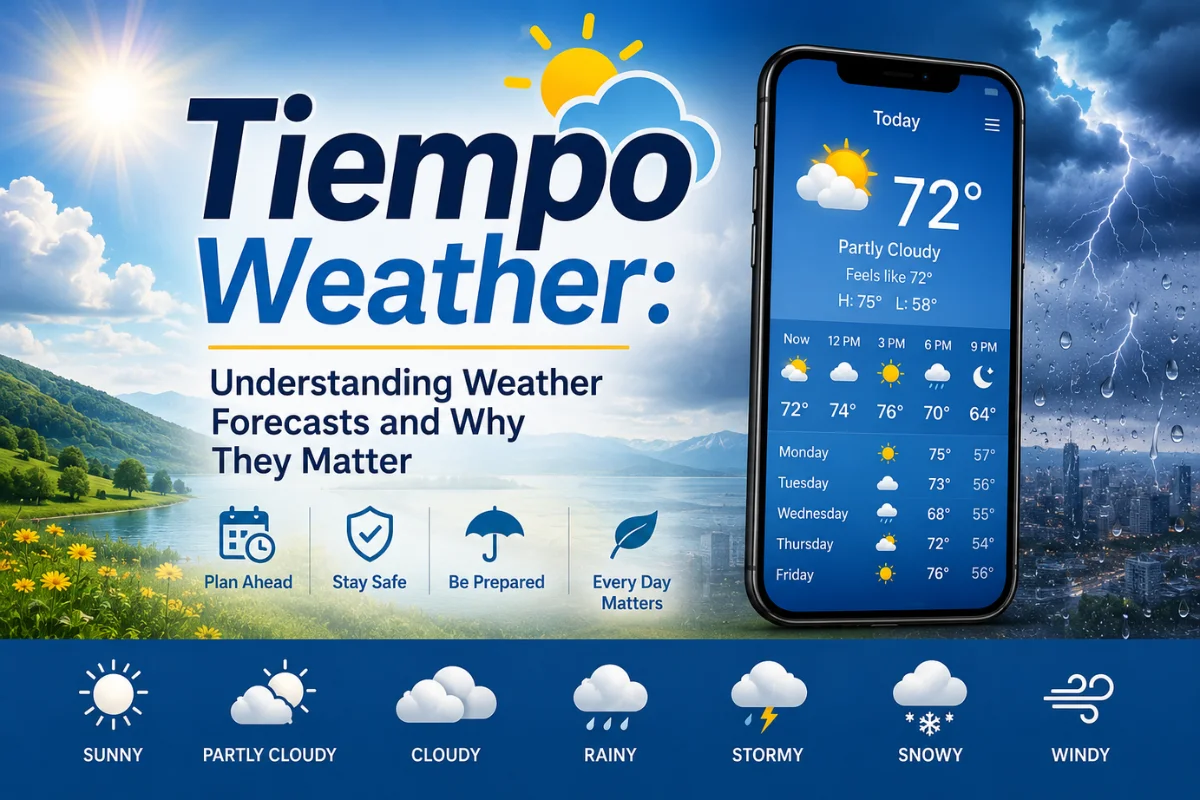
Weather plays an essential role in everyday life, influencing how people travel, work, study, and plan outdoor activities. From deciding what to wear in the morning to preparing for severe storms, accurate weather information helps individuals make smarter decisions and stay safe. As technology continues to improve, weather forecasting has become more reliable, giving people access to real-time updates through websites, mobile apps, television, and smart devices.
Among the most commonly searched weather-related terms is Tiempo Weather. The word tiempo comes from Spanish and can refer to both time and weather, depending on the context. When people search for Tiempo Weather, they are generally looking for current weather conditions, hourly forecasts, daily temperatures, rainfall predictions, wind speed, humidity levels, and severe weather alerts.
Whether you’re planning a vacation, commuting to work, organizing an outdoor event, or simply checking if you’ll need an umbrella, understanding how weather forecasts work can help you prepare for changing conditions with greater confidence.
In this guide, you’ll learn everything you need to know about Tiempo Weather, including how forecasts are created, the different types of weather information available, the factors that influence weather changes, and why reliable forecasts have become an important part of everyday life.
What Is Tiempo Weather?
Tiempo Weather refers to weather information presented using the Spanish word “tiempo,” which commonly means weather in weather-related contexts. It provides detailed forecasts that help people understand current conditions and prepare for upcoming weather changes.
Modern weather services collect information from satellites, weather stations, radar systems, ocean buoys, and advanced computer models. This data is analyzed to predict future atmospheric conditions as accurately as possible.
A typical Tiempo Weather forecast may include:
- Current temperature
- Hourly weather updates
- Daily and weekly forecasts
- Chance of rain or snowfall
- Wind speed and direction
- Humidity levels
- UV index
- Air quality information
- Sunrise and sunset times
- Severe weather alerts
By combining these details, users can make informed decisions before traveling, working outdoors, or planning recreational activities.
Why Weather Forecasts Matter
Weather forecasts have become an essential part of modern life because they provide valuable information that supports safety, productivity, and better planning. Instead of reacting to changing weather conditions, people can prepare in advance and reduce potential risks.
Individuals use weather forecasts for many different purposes, including:
- Planning daily routines
- Preparing for road trips
- Scheduling outdoor activities
- Protecting crops and livestock
- Managing construction projects
- Organizing sporting events
- Planning flights and marine travel
- Staying informed about storms and extreme weather
Businesses also rely on accurate forecasts to improve operations, reduce delays, and protect employees from hazardous weather conditions.
How Weather Forecasts Are Created
Weather forecasting is a combination of scientific observation, advanced technology, and computer modeling. Meteorologists continuously collect atmospheric data from multiple sources before generating predictions.
The forecasting process generally includes:
Weather Stations
Thousands of ground-based weather stations measure important atmospheric conditions such as:
- Temperature
- Air pressure
- Humidity
- Wind speed
- Rainfall
These observations provide real-time information from different regions.
Weather Satellites
Satellites monitor the Earth’s atmosphere from space, allowing meteorologists to observe:
- Cloud movement
- Storm development
- Ocean temperatures
- Snow cover
- Tropical cyclones
Satellite imagery makes it easier to track large weather systems before they reach populated areas.
Weather Radar
Radar technology detects precipitation and measures how storms move across different locations. It helps predict:
- Heavy rainfall
- Thunderstorms
- Snowfall
- Hail
- Tornado-producing storms
Radar updates are especially valuable during severe weather events.
Computer Forecast Models
Powerful supercomputers analyze millions of weather observations every day. These computer models simulate atmospheric conditions and estimate how weather patterns may develop over the coming hours and days.
Meteorologists review these model outputs before issuing public weather forecasts.
Main Types of Weather Forecasts
Weather services provide different forecast periods to meet various planning needs. Each forecast offers a different level of detail depending on how far into the future it predicts.
| Forecast Type | Coverage | Best Used For |
| Current Weather | Real-time conditions | Immediate planning |
| Hourly Forecast | Next 24–48 hours | Outdoor activities and commuting |
| Daily Forecast | 7–10 days | Travel and weekly planning |
| Extended Forecast | Up to two weeks | General weather outlook |
| Severe Weather Alerts | Immediate warnings | Public safety and emergency preparedness |
Key Weather Information Included in Tiempo Weather
Most modern weather forecasts include several important indicators that help people understand both current conditions and expected weather changes.
Temperature
Temperature is usually the first detail people check. It indicates how warm or cold the atmosphere is and helps people decide what clothing to wear or whether outdoor activities are comfortable.
Humidity
Humidity measures the amount of moisture in the air. High humidity can make warm temperatures feel hotter, while low humidity often creates drier conditions.
Wind Speed
Wind forecasts show both the speed and direction of moving air. Strong winds may affect travel, outdoor events, aviation, and marine activities.
Chance of Rain
Rain probability estimates the likelihood of precipitation occurring within a specific area during a certain time period. This information helps people prepare for wet weather by carrying umbrellas, adjusting travel plans, or rescheduling outdoor events.
Air Pressure
Changes in atmospheric pressure often signal approaching weather systems. Falling pressure may indicate stormy conditions, while rising pressure generally suggests clearer skies.
UV Index
The UV Index measures the strength of ultraviolet radiation from the sun. Higher values indicate a greater risk of sunburn, making sunscreen and protective clothing more important during outdoor activities.
Factors That Influence Weather Changes
Weather conditions are constantly changing because the atmosphere is affected by several natural factors. Understanding these elements helps explain why temperatures rise, storms develop, or weather patterns shift from one day to another.
Temperature and Solar Energy
The sun is the primary source of energy that drives Earth’s weather systems. Different areas receive different amounts of sunlight depending on their location, season, and time of day.
When the Earth’s surface absorbs solar energy, it warms the surrounding air. Warm air rises, creating movement in the atmosphere that can lead to changes in wind patterns, clouds, and precipitation.
Regions closer to the equator generally experience warmer conditions because they receive more direct sunlight, while areas near the poles remain colder due to limited solar exposure.
Air Pressure and Atmospheric Movement
Air pressure plays an important role in determining weather conditions. It refers to the weight of air pressing down on Earth’s surface.
High-pressure systems usually bring:
- Clear skies
- Calm winds
- Stable weather conditions
Low-pressure systems are often linked with:
- Cloud formation
- Rainfall
- Strong winds
- Storm development
Meteorologists monitor pressure changes closely because they can provide early signs of changing weather patterns.
Wind Patterns
Wind occurs when air moves from areas of higher pressure to areas of lower pressure. These movements help distribute heat and moisture around the planet.
Wind direction and speed can influence:
- Temperature changes
- Storm movement
- Rainfall patterns
- Ocean conditions
For example, coastal areas often experience different weather compared to inland regions because ocean winds can bring cooler air and additional moisture.
Moisture and Humidity Levels
Water vapor in the atmosphere is another major factor affecting weather. When warm, moist air rises and cools, it can create clouds and precipitation.
High moisture levels may lead to:
- Rainstorms
- Thunderstorms
- Heavy rainfall
- Increased humidity
Low moisture levels often result in:
- Dry conditions
- Clear skies
- Lower chances of rainfall
Weather forecasting systems analyze humidity levels to predict possible changes in atmospheric conditions.
Benefits of Using Tiempo Weather Forecasts
Reliable weather information provides many advantages for individuals, businesses, and communities. With modern forecasting technology, people can access detailed updates anytime and anywhere.
Better Daily Planning
One of the biggest benefits of checking weather forecasts is improved daily planning. Knowing expected conditions helps people decide:
- What clothes to wear
- Whether to carry rain protection
- When to travel
- How to organize outdoor activities
A simple weather update can save time and prevent unnecessary problems.
Improved Travel Preparation
Weather conditions can significantly affect transportation. Flights, road journeys, and marine activities may be influenced by storms, heavy rain, fog, or strong winds.
Travelers can use weather forecasts to:
- Choose safer travel times
- Avoid dangerous routes
- Prepare for delays
- Pack appropriate items
This makes journeys more comfortable and safer.
Support for Agriculture and Farming
Farmers have relied on weather information for centuries, but modern forecasts have made agricultural planning much more accurate.
Weather updates help farmers decide:
- When to plant crops
- When to irrigate fields
- When to apply fertilizers
- How to protect crops from extreme conditions
Accurate weather predictions can improve productivity and reduce losses caused by unexpected weather events.
Helping Businesses Make Better Decisions
Many industries depend on weather conditions to operate efficiently. Construction companies, delivery services, tourism businesses, and event organizers use forecasts to manage schedules and reduce risks.
For example:
- Construction teams can avoid dangerous working conditions.
- Outdoor event planners can prepare backup arrangements.
- Transportation companies can adjust routes during severe weather.
Best Ways to Check Tiempo Weather Updates
Today, people have multiple options for accessing weather information. Choosing reliable sources helps ensure more accurate and useful forecasts.
Weather Websites
Weather websites provide detailed information, including:
- Current conditions
- Extended forecasts
- Weather maps
- Radar images
- Severe weather warnings
They are useful for users who want complete weather details before making plans.
Mobile Weather Applications
Weather apps have become one of the most convenient ways to receive updates. Most apps provide:
- Real-time notifications
- Hourly forecasts
- Location-based updates
- Rain alerts
- Temperature changes
Because smartphones are always accessible, users can quickly check weather conditions whenever needed.
Smart Devices and Voice Assistants
Modern technology has made weather information easier to access through smart devices. Users can ask voice assistants for current conditions or upcoming forecasts without opening an app.
This feature is especially helpful when preparing for work, travel, or outdoor activities.
How Accurate Are Modern Weather Forecasts?
Weather forecasting has improved significantly due to advances in technology, data collection, and artificial intelligence. Modern forecasting systems can analyze huge amounts of information within seconds.
Short-term forecasts, such as predictions for the next few hours or days, are usually more accurate because meteorologists have clearer data about current atmospheric conditions.
Long-term forecasts can provide useful trends but may become less precise because weather systems can change unexpectedly.
Factors that affect forecast accuracy include:
- Location
- Weather complexity
- Available data
- Seasonal changes
- Strength of weather systems
Continuous improvements in technology continue to make weather predictions more reliable.
Tips for Reading Weather Forecasts Correctly
Many people check weather updates but may not fully understand all the information provided. Knowing how to interpret forecasts can make them more useful.
Check More Than Temperature
Temperature alone does not describe the complete weather situation. Always consider:
- Wind speed
- Humidity
- Rain probability
- UV levels
These factors influence how the weather actually feels.
Pay Attention to Alerts
Severe weather warnings should always be taken seriously. Alerts provide important information about storms, floods, heat waves, or other dangerous conditions.
Compare Short-Term Updates
Weather conditions can change quickly. Checking updated forecasts regularly provides more accurate information, especially before important activities.
The Future of Tiempo Weather Forecasting
Weather forecasting continues to evolve as technology becomes more advanced. Scientists and meteorologists are using improved tools, artificial intelligence, and advanced data analysis methods to make predictions faster and more accurate.
Future weather systems are expected to provide more personalized forecasts based on individual locations, daily routines, and specific needs. Instead of receiving general weather information, users may receive customized updates such as the best time for outdoor activities, travel recommendations, or warnings based on their exact location.
Advanced forecasting technology will also help communities prepare better for extreme weather events such as hurricanes, floods, heat waves, and severe storms.
The Role of Artificial Intelligence in Weather Prediction
Artificial intelligence has become an important part of modern weather forecasting. AI systems can analyze massive amounts of weather data much faster than traditional methods.
These technologies help improve predictions by studying:
- Historical weather patterns
- Satellite images
- Atmospheric changes
- Temperature trends
- Storm movements
AI-powered forecasting can identify patterns that may be difficult for humans to detect. This allows meteorologists to provide faster warnings and more detailed predictions.
As AI technology continues to improve, future weather forecasts are expected to become even more precise and reliable.
Why Reliable Weather Information Is Important for Safety
Accurate weather updates are not only useful for planning daily activities but also play a major role in protecting lives and property.
Severe weather conditions can create serious risks, including:
- Flooding
- Strong winds
- Extreme temperatures
- Heavy snowfall
- Dangerous storms
Early warnings allow people, governments, and emergency organizations to take necessary precautions.
For example, weather alerts can help communities prepare evacuation plans, protect infrastructure, and reduce the impact of natural disasters.
Common Questions About Tiempo Weather
What Does Tiempo Weather Mean?
Tiempo Weather refers to weather information and forecasts. The word “tiempo” is commonly used in Spanish-speaking regions to describe weather conditions, including temperature, rain, wind, and atmospheric changes.
How Often Should I Check Weather Forecasts?
The frequency depends on your needs. For regular daily activities, checking once in the morning may be enough. However, people involved in travel, outdoor work, or events should check updates more frequently.
Are Weather Forecasts Always Accurate?
Weather forecasts have become highly reliable, especially for short-term predictions. However, weather is a natural system that can change quickly, so forecasts may sometimes differ from actual conditions.
What Information Is Included in a Weather Forecast?
A complete weather forecast usually includes:
- Temperature
- Rain chances
- Wind speed
- Humidity
- Air pressure
- Cloud conditions
- Severe weather warnings
These details help users understand what conditions to expect.
Can Weather Forecasts Help During Travel?
Yes, weather forecasts are extremely useful for travelers. They help people prepare for possible weather challenges, select better travel times, and avoid dangerous conditions.
Conclusion
Tiempo Weather has become an important resource for understanding changing weather conditions and planning everyday activities. From checking morning temperatures to preparing for severe storms, accurate weather information helps people make safer and smarter decisions.
Modern forecasting combines satellite technology, weather stations, radar systems, computer models, and artificial intelligence to provide detailed and timely updates. These advancements have made weather predictions more accessible and reliable than ever before.
Whether you are planning a trip, organizing an outdoor event, managing a business, or simply preparing for the day ahead, staying informed about weather conditions can make a significant difference.
As technology continues to develop, Tiempo Weather forecasting will become even more personalized, accurate, and valuable for people around the world.
