
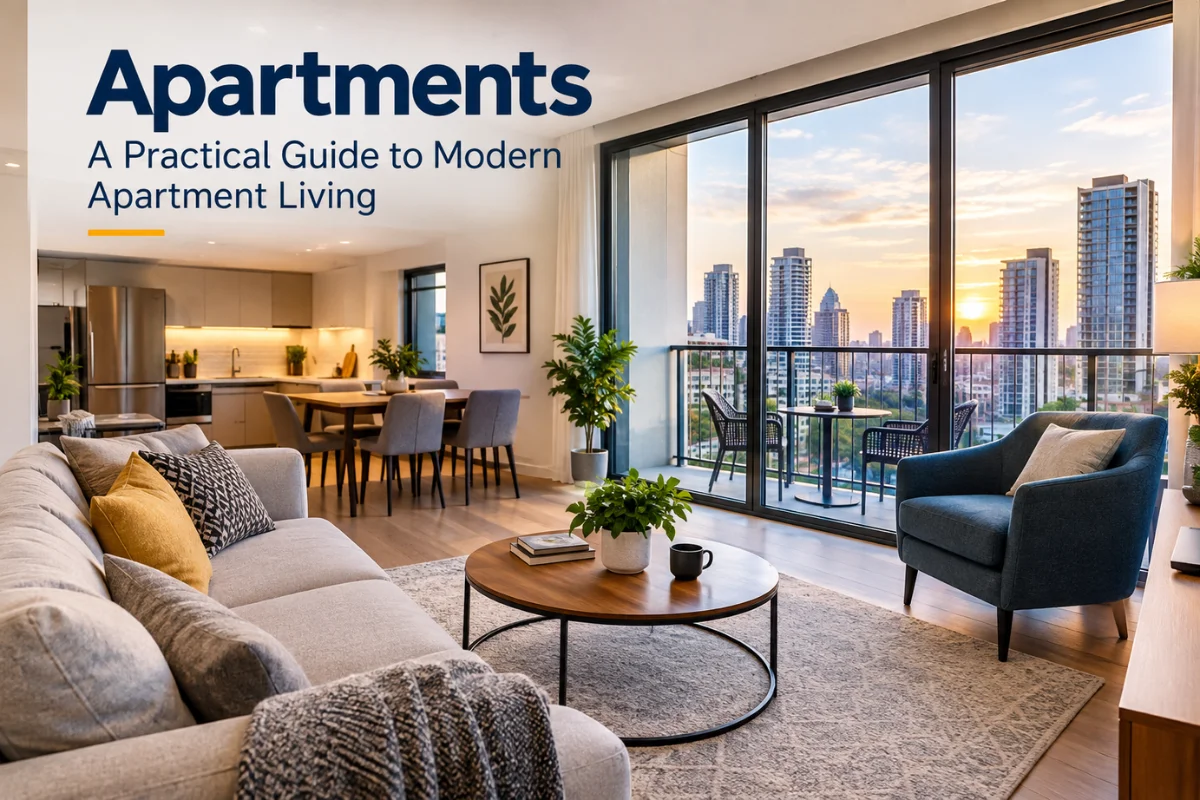
Apartments have become an important part of modern residential life. For many people, an apartment offers more than a place to sleep and relax. It can provide security, convenience, shared amenities, easier maintenance, and access to well-connected urban locations.
Whether someone is renting their first apartment, buying a home, or considering an apartment as an investment, the decision requires careful thought. The right apartment can make everyday life easier, while the wrong choice can create problems with maintenance, noise, parking, costs, or location.
Modern apartment living is also changing. Residents increasingly look for flexible spaces, reliable internet, smart technology, energy-efficient features, comfortable shared areas, and practical amenities.
What Is an Apartment?
An apartment is a self-contained residential unit within a larger building or residential complex. Depending on the property, it may include a studio, one-bedroom, two-bedroom, three-bedroom, or larger layout.
Unlike a standalone house, an apartment normally shares certain facilities with other residents. These may include entrances, elevators, parking areas, hallways, gardens, gyms, recreation areas, or security systems.
The size and design of an apartment can vary considerably. A compact studio may be suitable for one person, while a three-bedroom apartment can accommodate a family comfortably.
The important point is that an apartment is not simply about square footage. Layout, natural light, ventilation, storage, privacy, building quality, and access to everyday services can have a major effect on the living experience.
Why Apartment Living Is Becoming Popular
Urban lifestyles have changed significantly. People often want to live closer to workplaces, schools, shopping areas, healthcare facilities, restaurants, and public transportation.
Apartments can make this easier because residential buildings are frequently developed in or around established urban areas.
Another attraction is convenience. In a professionally managed building, residents may not have to personally arrange every repair or maintain large outdoor areas. Shared services can cover security, cleaning, elevators, common spaces, and other building requirements.
Modern developments are also focusing more on community spaces. Shared lounges, work areas, fitness facilities, outdoor spaces, and flexible rooms can give residents places to work, socialize, exercise, or relax without leaving the building.
Main Types of Apartments
Apartments are available in different layouts to suit different lifestyles and budgets.
Studio Apartments
A studio is generally a compact unit where the living, sleeping, and sometimes kitchen areas are combined into one main space. It can work well for students, single professionals, or people who prefer a smaller home.
The biggest advantage is simplicity. There is less space to clean and maintain, and the overall cost may be lower than a larger apartment.
One-Bedroom Apartments
A one-bedroom apartment normally has a separate bedroom along with a living area, kitchen, and bathroom.
This layout is popular among individuals and couples who want more privacy than a studio provides.
Two-Bedroom Apartments
Two-bedroom apartments offer greater flexibility. They can accommodate a small family, provide a guest room, or allow one room to be used as a home office.
As remote and hybrid work arrangements continue to influence residential preferences, having a separate flexible room can be particularly useful.
Three-Bedroom and Larger Apartments
Larger apartments are designed for families who need additional bedrooms, storage, and living space.
They can provide many of the advantages of apartment living while offering a layout closer to what a family might expect from a traditional house.
Key Features to Look for in an Apartment
Choosing an apartment should involve more than looking at photographs or comparing prices. Several practical features deserve attention.
Location
Location remains one of the most important factors.
An apartment close to workplaces, schools, hospitals, shopping areas, and major roads can reduce daily travel time. Before making a decision, visit the neighborhood at different times of the day.
Check traffic, noise levels, parking conditions, nearby construction, and access to essential services.
Security
Security can have a significant impact on peace of mind.
Potential residents should look at building entrances, visitor management, lighting, CCTV coverage, security staff, access controls, and emergency procedures.
A long list of security features is less important than knowing whether the systems are properly maintained and actually used.
Parking
Parking is sometimes overlooked during an apartment search. However, it can become a daily frustration if spaces are limited or poorly managed.
Ask whether parking is assigned, shared, covered, or available for visitors. Also check whether additional parking charges apply.
Natural Light and Ventilation
A well-designed apartment should make good use of natural light and airflow.
During a viewing, open windows and observe how much daylight enters different rooms. Check whether bedrooms receive sufficient ventilation and whether neighboring buildings block views or sunlight.
These details can influence comfort and energy use over time.
Storage
Storage becomes increasingly important as people live in an apartment for several years.
Look for built-in wardrobes, kitchen cabinets, utility areas, and other practical storage solutions. A beautiful apartment with insufficient storage can become difficult to organize.
Modern Apartment Amenities
Amenities have become an important part of apartment selection. However, buyers and renters should focus on facilities that provide genuine everyday value rather than simply choosing the building with the longest feature list.
Common amenities include gyms, swimming pools, children’s play areas, gardens, lounges, rooftop spaces, community rooms, and walking areas.
Modern apartment developments are also experimenting with spaces that can serve multiple purposes. A shared room may function as a workspace during the day and a social area in the evening.
The growing importance of flexible and community-oriented spaces reflects changing expectations among residents.
Smart Technology in Apartments
Technology is becoming another important part of residential design.
Smart locks, automated lighting, connected thermostats, smart appliances, security cameras, and app-based building services can make an apartment more convenient.
Smart-home technology can also help residents control certain functions remotely. For example, smart locks can provide digital access, while connected thermostats can help manage indoor temperatures.
However, technology should be practical rather than simply decorative. Residents should consider reliability, maintenance, privacy, internet requirements, and replacement costs before paying extra for advanced systems.
Energy Efficiency and Sustainability
Energy efficiency is increasingly relevant when choosing a home.
Features such as efficient lighting, well-insulated windows, energy-efficient appliances, natural ventilation, and effective heating or cooling systems can improve comfort while potentially reducing utility consumption.
Some newer residential developments are also incorporating sustainability-focused features and electric-vehicle charging facilities.
Residents should look beyond marketing claims and ask practical questions. How efficient are the appliances? What type of windows are installed? Is backup power available? How is common-area electricity managed?
Understanding these details can provide a clearer picture of long-term living costs.
Apartment Living vs. House Living
Both apartments and houses have advantages. The right choice depends on lifestyle, budget, family size, and personal priorities.
| Factor | Apartment Living | House Living |
| Maintenance | Shared building maintenance can reduce individual workload | Owner usually manages most maintenance |
| Security | Often includes controlled access and shared security | Security depends more on the individual property |
| Outdoor Space | Usually shared or limited | More opportunities for private outdoor space |
| Privacy | Shared walls and common areas may reduce privacy | Generally offers greater private space |
| Amenities | May include gyms, pools, lounges, or shared facilities | Amenities depend on the individual house |
| Location | Often available near urban centers | Larger homes may be farther from central areas |
| Flexibility | Different unit sizes and layouts are available | More scope for private modifications |
| Community | Shared spaces can encourage interaction | More independent residential experience |
The choice should therefore be based on actual needs rather than assuming one property type is suitable for everyone.
What to Check Before Renting an Apartment
Renters should understand the full cost before signing a lease.
The monthly rent is only one part of the calculation. Ask about utility bills, maintenance charges, parking fees, internet costs, security deposits, and any additional building charges.
Read the lease carefully. Check the rental period, renewal conditions, notice requirements, repair responsibilities, restrictions on alterations, and rules regarding pets or guests.
It is also useful to inspect the apartment before moving in. Photograph existing damage and confirm that major appliances, plumbing, electrical outlets, doors, windows, and fixtures are working properly.
What to Check Before Buying an Apartment
Buyers need to perform additional checks because the financial commitment is much larger.
Start by verifying ownership and relevant property documentation. If the apartment is part of a larger development, check the project’s approvals and documentation with the appropriate authorities.
Next, research the developer and building management. Previous projects can provide useful information about construction quality, handover practices, maintenance, and customer service.
Buyers should also understand all additional costs. These may include transfer charges, maintenance fees, parking costs, taxes, documentation expenses, and other project-specific charges.
A recent 2026 buyer guide for apartments in Pakistan similarly emphasizes checking ownership documents, approvals, taxes, and other legal details before purchasing.
Apartments as an Investment
Apartments can also be considered for rental income or long-term property ownership.
Smaller units, particularly studios and one-bedroom apartments, may appeal to students, professionals, couples, and other tenants who do not need large homes. However, rental performance depends heavily on location, property quality, tenant demand, purchase price, maintenance costs, and the overall condition of the local market.
Investors should calculate expected rental income against the complete ownership cost rather than focusing only on the advertised rent.
Vacancy periods, repairs, taxes, management expenses, and building maintenance can all affect the actual return.
Common Mistakes to Avoid
One common mistake is choosing an apartment solely because it looks attractive in photographs.
Another is ignoring monthly maintenance costs. A building with extensive amenities may also have higher operating expenses.
Buyers and renters should also avoid skipping a physical inspection. Online listings can provide useful information, but they cannot show everything about noise, ventilation, neighborhood activity, construction quality, or parking.
Finally, never rush because of sales pressure. Take time to compare layouts, documents, costs, location, building management, and long-term suitability.
Final Thoughts
Apartments can offer a practical combination of comfort, security, convenience, and community living. Modern developments are increasingly adding flexible spaces, smart technology, energy-conscious features, and lifestyle amenities to meet changing resident expectations.
However, the best apartment for one person may not be the right apartment for another. A student may prioritize location and affordability, while a family may care more about bedrooms, schools, parking, and security. An investor may focus on rental demand and long-term costs.
The smartest approach is to look beyond the appearance of a property and examine how well it fits everyday life. A good apartment should not only look impressive on viewing day. It should remain practical, comfortable, manageable, and suitable for the resident’s needs over the years.
